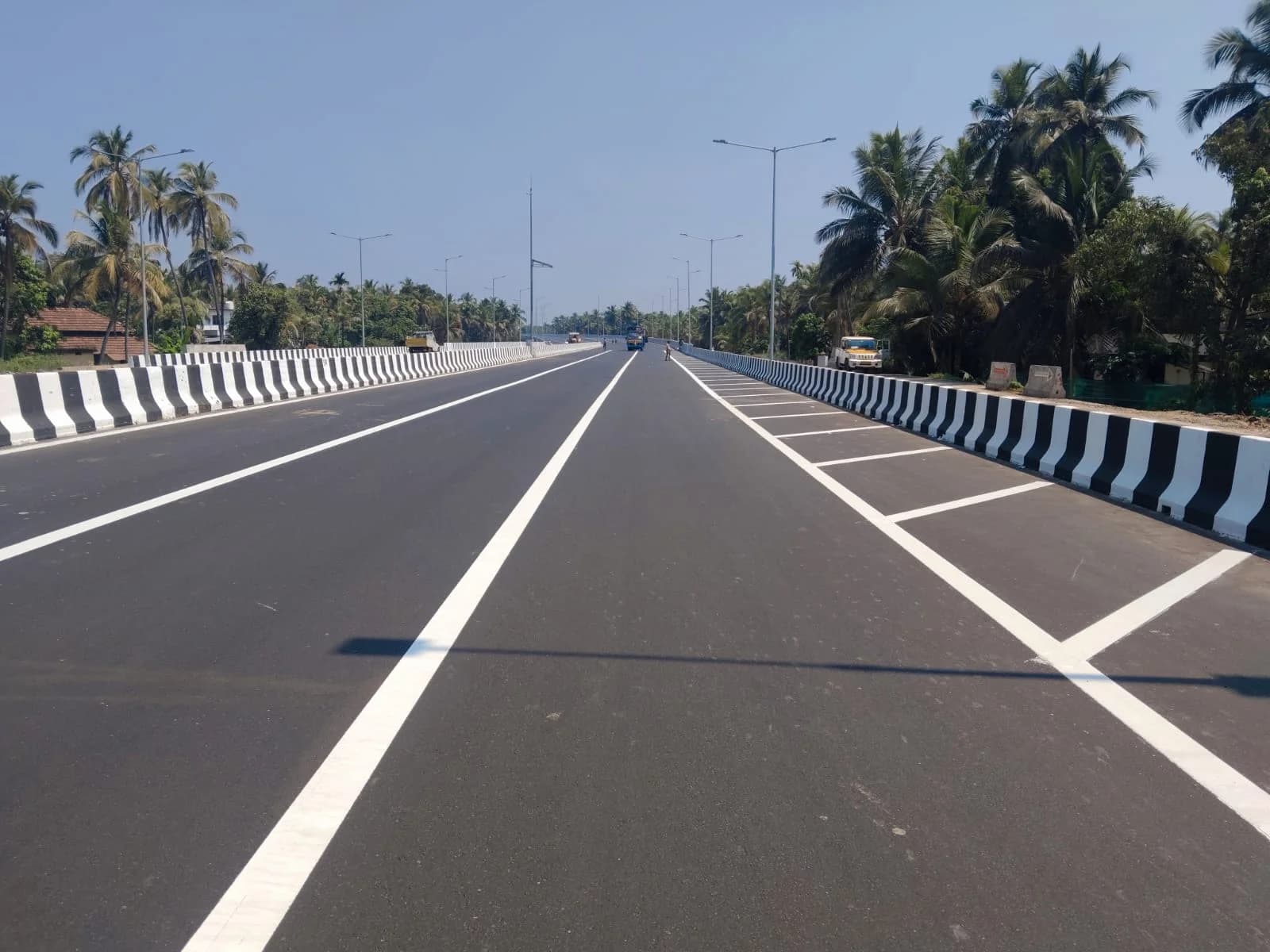
Thermoplastic vs Cold Paint Road Marking: A Global Comparison
Hot-applied thermoplastic versus cold-applied paint compared across durability, retroreflectivity, skid resistance, climate suitability and lifecycle cost — and where each performs best on highways, airports, ports and city streets.
Thermoplastic vs Cold Paint: Choosing the Right Road Marking
Road markings are among the most cost-effective road safety measures in the world, guiding drivers, separating traffic streams and reducing run-off and head-on crashes. Two material families dominate the global market: hot-applied thermoplastic and cold-applied paint (solvent-borne or water-borne). Choosing between them is rarely about which is universally "better" — it is about matching the material to the traffic volume, pavement, climate and budget of a specific project.
Both systems rely on the same optical principle for night-time performance: glass beads embedded in or dropped onto the marking retroreflect vehicle headlights back toward the driver. What differs is how the binder is applied, how long it lasts, how it behaves in heat and cold, and what it costs over its service life. This guide compares the two objectively for an international audience, referencing the standards that govern markings worldwide.
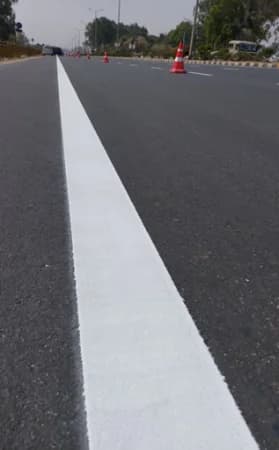
Drop-on glass beads give both thermoplastic and paint markings their night-time retroreflectivity
The Two Systems Explained
Understanding how each material is built and applied is the foundation for every comparison that follows.
Hot-Applied Thermoplastic
Thermoplastic is a solid compound supplied as powder or blocks, then heated in a melt kettle to roughly 180-220 C and applied while molten by screed, spray or extrusion. It typically consists of a binder resin, plasticiser, pigment (commonly titanium dioxide for white), filler aggregate, and intermix glass beads, with a further layer of drop-on beads applied to the hot surface for immediate retroreflectivity.
- Build thickness: Applied thick, commonly 1.5-3 mm, forming a raised, wear-resistant film.
- Cure mechanism: Sets physically as it cools — usually trafficable within minutes.
- Formulations: Available as flat/solid lines, or as profiled/structured (rib or dot) markings that improve wet-night visibility and generate rumble.
Cold-Applied Paint
Cold paint is a liquid coating applied at ambient temperature and left to dry. Two chemistries are common worldwide: solvent-borne paints that dry by solvent evaporation, and increasingly water-borne paints favoured for lower VOC emissions. Glass beads are dropped onto the wet film during application.
- Build thickness: Thin, typically 0.15-0.5 mm wet, so material consumption per square metre is low.
- Cure mechanism: Dries by evaporation; drying time depends on temperature and humidity.
- Related cold systems: For the most demanding sites, cold plastics such as two-component MMA (methyl methacrylate) and preformed thermoplastic tapes offer paint-like cold application with far greater durability.
Head-to-Head Comparison
Here is how the two systems perform across the criteria that matter most to road authorities and contractors.
Durability and Wear
Thermoplastic is the clear leader on service life. Its thick, hard-wearing film commonly lasts 3-8 years on high-traffic roads, depending on traffic volume and studded-tyre use. Cold paint is thin and wears faster, often needing reapplication every 1-2 years (sometimes twice a year on very heavy routes). MMA cold plastics rival or exceed thermoplastic longevity.
Retroreflectivity and Glass Beads
Both systems achieve night-time visibility through glass beads that meet standards such as EN 1423/1424 and ASTM D4956-family specifications. Thermoplastic combines intermix and drop-on beads, so as the surface wears fresh beads are continually exposed, sustaining retroreflectivity longer. Paint relies mainly on drop-on beads, so its brightness can fall faster. Performance is measured as the coefficient of retroreflected luminance (RL, in mcd/m²/lux), with EN 1436 and MUTCD-referenced guidance setting minimum maintained levels.
Skid Resistance
A marking must not become a slippery patch. Both systems can incorporate anti-skid aggregate to maintain a skid resistance value (SRV) comparable to the surrounding pavement. Structured or profiled thermoplastic offers particularly good wet skid performance and drainage. Thick flat markings must be specified with adequate anti-skid to avoid a polished surface.
Climate Suitability
Thermoplastic bonds best to asphalt in warm conditions and generally should not be applied below about 10 C; in very hot tropical climates soft asphalt can allow tracking, and it adheres less readily to concrete without a primer. Cold paint can be applied across a wider temperature window and suits cooler climates and concrete, but water-borne paint dries slowly in high humidity or cold. For freeze-thaw and studded-tyre regions, MMA and profiled thermoplastic are frequently preferred.
| Criterion | Thermoplastic | Cold Paint |
|---|---|---|
| Service life | 3-8 years | 1-2 years |
| Film thickness | 1.5-3 mm | 0.15-0.5 mm |
| Retroreflectivity retention | High (intermix + drop-on) | Moderate (drop-on) |
| Material cost / m² | Higher | Lower |
| Application speed / dry time | Fast set (minutes) | Fast lay, weather-dependent dry |
| Best surfaces | Warm asphalt (primer on concrete) | Asphalt and concrete |
Where to Use Each: Highways, Airports, Ports and Cities
The right choice changes with the environment. Here is how the systems map to the major application classes internationally.
Highways and Expressways
High traffic volumes and high speeds reward durability and strong wet-night visibility. Thermoplastic — especially profiled/structured lines — is the global default for centre lines, lane lines and edge lines on primary routes, reducing lane-closure frequency for re-marking. Cold paint is still used for temporary or interim markings and on lower-volume rural roads where budgets favour frequent, cheaper repainting.
Airports
Airfield markings follow ICAO Annex 14 and, in the United States, FAA advisory circulars. Runways and taxiways commonly use water-borne or solvent-borne paint, because markings must be recoated regularly, kept free of loose material (FOD risk), and sometimes removed and repositioned. Thick raised thermoplastic is generally avoided on runways for FOD and friction reasons, though it appears in some apron and landside areas.
Ports, Terminals and Industrial Yards
Container terminals and logistics yards face heavy, slow, turning wheel loads and often concrete or block paving. Hard-wearing MMA cold plastic and thermoplastic (with primer on concrete) suit permanent lane and bay markings, while paint suits areas that are frequently re-configured. Colour-coding of pedestrian routes and equipment lanes is a common requirement.
City Streets and Urban Networks
Urban networks mix crosswalks, symbols, cycle lanes, bus lanes and parking. Thermoplastic and preformed thermoplastic sheeting excel for pedestrian crossings, arrows and legends that take concentrated foot and tyre wear. Fast-drying water-borne paint is valued for large-area line renewal with minimal traffic disruption and lower emissions in dense areas.
Application and Lifecycle Cost
Comparing only the price per litre or per kilogram is misleading. The meaningful figure is the whole-life cost: material, labour, traffic management and the number of reapplications over a planning horizon.
Application Requirements
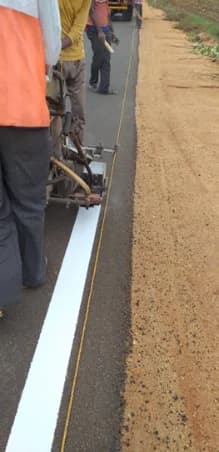
- Thermoplastic needs melting equipment (kettles, screed or spray applicators), trained crews and careful temperature control. Capital and mobilisation costs are higher, but each pass lasts far longer.
- Cold paint needs simpler line-marking machines, dries quickly and is easy to mobilise for large networks, but must be reapplied more often — multiplying labour and traffic-management costs.
Thinking in Whole-Life Terms
On a busy highway, a thermoplastic line lasting five years can be cheaper over that period than paint reapplied several times, once the recurring cost of lane closures and crew mobilisation is counted — even though its up-front material cost is higher. On low-volume roads with tight annual budgets, the low first cost of paint can be the rational choice. Structured thermoplastic and MMA cost more initially but can offer the lowest cost per year of effective service life on the most demanding sites.
Specification tip: Specify markings by measured performance — minimum retroreflectivity (RL), skid resistance and durability class — rather than by material name alone. Performance-based specifications let you compare thermoplastic, paint and cold plastic fairly on a whole-life basis.
Global Standards and Compliance
Road markings are governed by a well-developed body of international and regional standards. Specifying to the right ones ensures materials perform and are accepted by the road authority.
European (EN) Standards
- EN 1436: Performance of road markings for road users — retroreflectivity, luminance, colour and skid resistance classes.
- EN 1423 / EN 1424: Drop-on and premix glass beads, anti-skid aggregates and their mixtures.
- EN 1871 / EN 12802: Physical properties and identification of road marking materials.
- EN 12899: Fixed vertical road traffic signs (related road-equipment retroreflection references).
North American Standards
- ASTM D4956: Retroreflective sheeting; the ASTM D-series also covers marking materials and glass beads.
- MUTCD: The Manual on Uniform Traffic Control Devices governs marking layout, colour and maintained retroreflectivity in the United States.
- AASHTO: Material and testing references used by state highway agencies.
Other International References
- ISO standards for colorimetry and glass bead quality used globally.
- MoRTH and IRC specifications (India) referencing thermoplastic and paint marking practice.
- ICAO Annex 14 / FAA advisory circulars for airfield markings.
Conclusion: Matching Material to Mission
There is no single winner in the thermoplastic-versus-cold-paint debate. Thermoplastic wins where durability, sustained retroreflectivity and reduced lane closures matter most — busy highways, urban crossings and permanent industrial markings. Cold paint wins where low first cost, fast mobilisation, cooler climates, concrete surfaces or frequently changed layouts dominate — and it remains the practical choice for airfields and large low-volume networks. For the harshest conditions, MMA cold plastics and structured markings bridge the two.
The right decision balances traffic volume, pavement type, climate, safety targets and whole-life cost, specified against recognised standards. As a global supplier and exporter headquartered in Bangalore, India, TMR Road Safety sources thermoplastic compounds, cold-applied paints, glass beads and application equipment from trusted manufacturers and delivers to projects worldwide — helping authorities and contractors specify the right system for each road. Contact us at +91 81234 40049 or srjoshi@tmrglobalexports.com to discuss your requirements.
TMR Road Safety Team
TMR Road Safety is a global supplier and exporter of road marking materials and traffic safety products, headquartered in Bangalore, India. We source thermoplastic compounds, cold-applied paints, glass beads and application equipment from trusted manufacturers and deliver to projects worldwide.
Frequently Asked Questions
Common questions about thermoplastic and cold paint road marking
Which lasts longer, thermoplastic or cold paint?
How do glass beads affect road marking performance?
Is thermoplastic suitable for cold or very hot climates?
Why do airports usually use paint rather than thermoplastic?
Is thermoplastic more expensive than cold paint?
Which standards govern road marking materials internationally?
Planning a Road Marking Project?
Whether you need durable thermoplastic for high-traffic highways or fast-drying cold paint for large networks, TMR Road Safety sources quality-tested materials and glass beads from trusted manufacturers and exports worldwide. Contact us at +91 81234 40049 or srjoshi@tmrglobalexports.com for specifications and a quote.