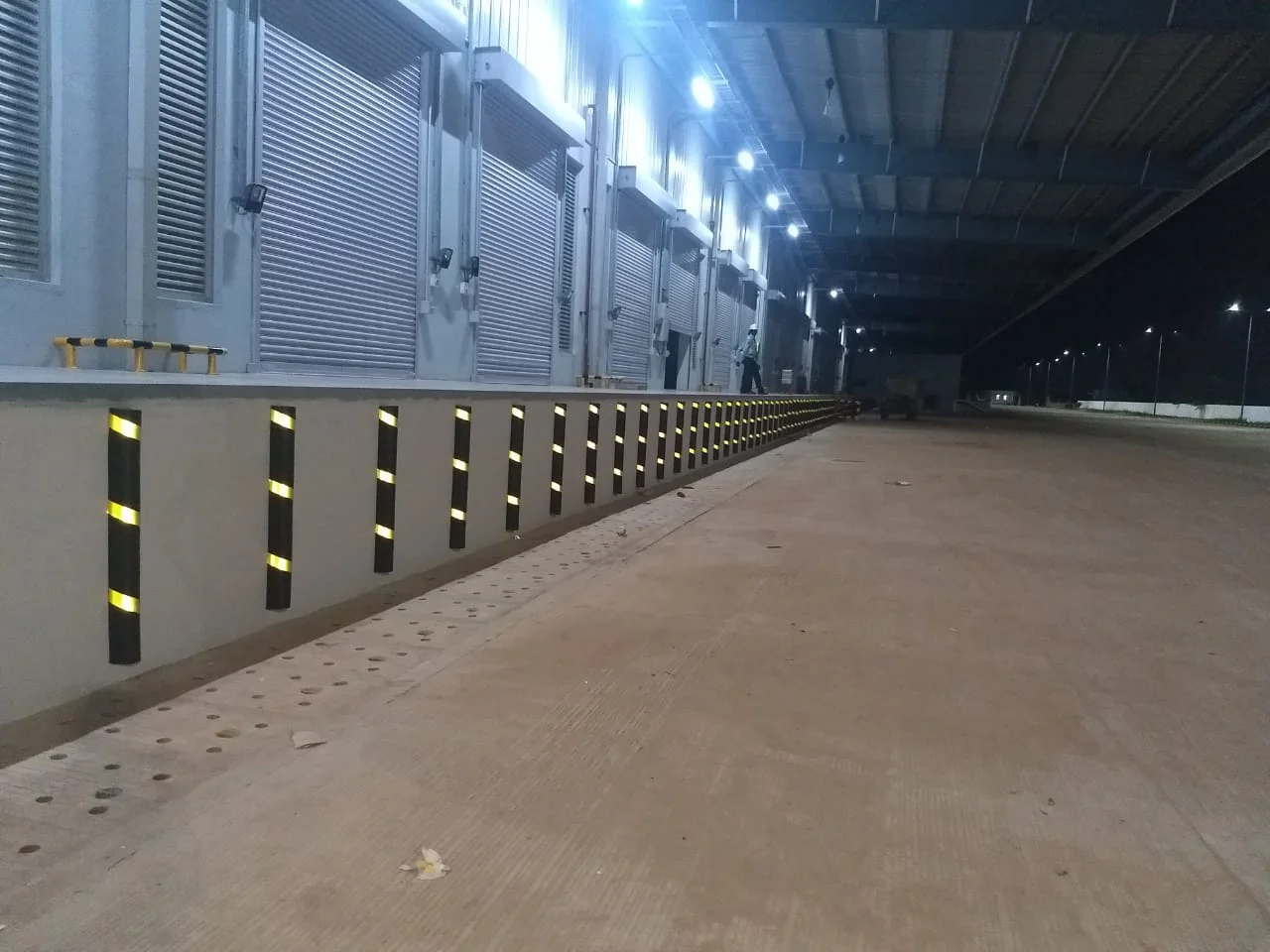
Dock Bumpers Supplier & Exporter
Heavy-Duty Dock Protection for Warehouses, Distribution Centers & Loading Bays
TMR supplies and exports industrial-grade dock bumpers that protect loading docks and vehicles. Our molded rubber, laminated and steel-faced dock bumpers absorb impact energy during truck docking, preventing costly damage to infrastructure and vehicles.
Choose the Right Dock Bumper for Your Loading Dock
Three types of dock bumpers to meet different load requirements and application needs
Molded Rubber Dock Bumpers
Standard Sizes:
Advantages:
- Cost-effective protection
- Good impact absorption
- Uniform density throughout
- Multiple size options
- Easy replacement when worn
Best For:
- Standard loading docks
- Distribution centers
- Light to medium truck traffic
- General warehouse operations
Laminated Dock Bumpers
Standard Sizes:
Advantages:
- Superior durability vs. molded bumpers
- Better impact absorption
- Longer service life (8-10 years)
- Withstands heavy truck traffic
- Excellent recovery after compression
Best For:
- High-volume distribution centers
- Heavy truck traffic docks
- 24/7 operations
- Cold storage facilities
- Facilities with frequent docking
Steel-Faced Dock Bumpers
Standard Sizes:
Advantages:
- Maximum protection against heavy impact
- Steel face distributes forces across rubber
- Resists cutting and abrasion from trailer plates
- Longest service life (10+ years)
- Ideal for air-ride suspension trailers
Best For:
- Heavy industrial facilities
- High-impact loading docks
- Air-ride suspension trailers
- Steel-to-steel contact prevention
- Maximum durability requirements
Dock Bumper Technical Specifications
Compare specifications across our range of heavy-duty dock bumpers
| Specification | Molded Rubber | Laminated | Steel-Faced |
|---|---|---|---|
| Standard Sizes | 10"-18" width | 10"-24" width | 12"-36" width |
| Thickness | 2"-4" (50-102mm) | 4"-6" (102-152mm) | 6" (152mm) |
| Construction | One-piece molded | Multi-layer laminated | Rubber + steel plate |
| Rubber Hardness | 70-80 Shore A | 65-75 Shore A | 65-75 Shore A |
| Load Capacity | Up to 25 tons | Up to 35 tons | Up to 40 tons |
| Service Life | 5-7 years | 8-10 years | 10+ years |
| Temperature Range | -30°C to +70°C | -40°C to +80°C | -40°C to +80°C |
| Chemical Resistance | Oil, grease resistant | Oil, grease, solvent | Oil, grease, solvent |
| Warranty | 2 years | 3 years | 5 years |
| Pricing | Price on request | Price on request | Price on request |
Standard Sizes
Molded
10"-18" width
Laminated
10"-24" width
Steel-Faced
12"-36" width
Thickness
Molded
2"-4" (50-102mm)
Laminated
4"-6" (102-152mm)
Steel-Faced
6" (152mm)
Construction
Molded
One-piece molded
Laminated
Multi-layer laminated
Steel-Faced
Rubber + steel plate
Rubber Hardness
Molded
70-80 Shore A
Laminated
65-75 Shore A
Steel-Faced
65-75 Shore A
Load Capacity
Molded
Up to 25 tons
Laminated
Up to 35 tons
Steel-Faced
Up to 40 tons
Service Life
Molded
5-7 years
Laminated
8-10 years
Steel-Faced
10+ years
Temperature Range
Molded
-30°C to +70°C
Laminated
-40°C to +80°C
Steel-Faced
-40°C to +80°C
Chemical Resistance
Molded
Oil, grease resistant
Laminated
Oil, grease, solvent
Steel-Faced
Oil, grease, solvent
Warranty
Molded
2 years
Laminated
3 years
Steel-Faced
5 years
Pricing
Molded
Price on request
Laminated
Price on request
Steel-Faced
Price on request
Loading Dock Applications
Warehouses & Distribution Centers
High-volume loading/unloading operations with multiple daily truck movements
Manufacturing Facilities
Raw material receiving docks and finished goods shipping operations
Cold Storage & Refrigerated Facilities
Temperature-controlled loading areas with condensation-resistant materials
Retail & Commercial Loading
Store receiving docks, shopping mall loading areas, hotel service docks
Logistics & Transportation Hubs
Freight terminals, cross-docking facilities, container handling areas
Frequently Asked Questions
Get answers to common questions about our dock bumpers
Dock bumpers are protective devices installed on loading dock walls to absorb the impact of trucks and trailers during backing and docking operations. They protect both the building structure (concrete walls, dock levelers, foundations) and the vehicles (trailers, truck bodies) from damage caused by repeated contact during loading and unloading.
Molded dock bumpers are one-piece rubber units suitable for standard loading docks with light to medium traffic. Laminated dock bumpers consist of multiple rubber layers bonded together, offering superior durability for high-traffic facilities. Steel-faced dock bumpers feature a rubber backing with a steel face plate, providing maximum protection for heavy industrial applications and air-ride suspension trailers.
The lifespan of dock bumpers depends on the type and traffic volume. Molded rubber dock bumpers typically last 5-7 years in normal use. Laminated dock bumpers last 8-10 years due to their multi-layer construction. Steel-faced dock bumpers provide the longest service life of 10+ years thanks to their protective steel face plate. All TMR dock bumpers come with warranties ranging from 2-5 years.
Dock bumpers are typically installed using heavy-duty lag bolts or through-bolts anchored into the concrete dock wall. Installation involves marking the mounting location, drilling holes, inserting anchors, and securing the bumper with bolts. Larger laminated and steel-faced bumpers may require welded mounting plates for additional security. Professional installation is recommended for proper alignment and maximum protection.
Standard dock bumper sizes range from 10" to 36" in width, with thicknesses from 2" to 6". For standard box trucks and trailers, 12" x 12" x 4" molded or laminated bumpers are typically sufficient. For heavy-duty applications with frequent large truck traffic, 18"-24" wide laminated or steel-faced bumpers with 6" thickness are recommended. Contact us for a site assessment to determine the optimal size for your specific needs.
Yes, all TMR dock bumpers are designed for outdoor installation and are weather-resistant. Our rubber compounds are UV-stabilized to prevent degradation from sun exposure, ozone-resistant to prevent cracking, and can withstand temperature ranges from -40°C to +80°C. They are also resistant to rain, snow, oils, greases, and common industrial chemicals.