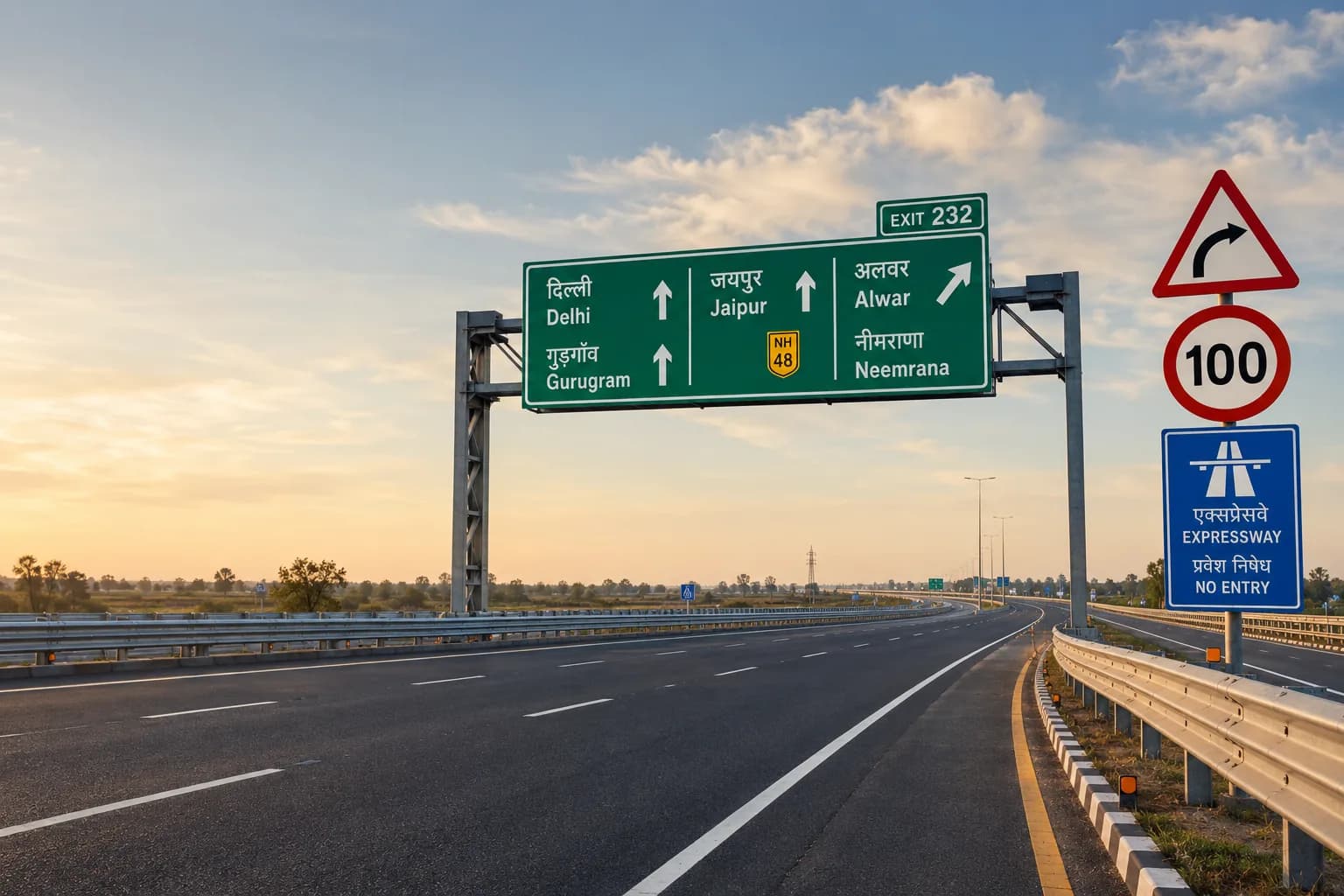
How to Source Road Safety Products for International Projects
A practical procurement guide to sourcing road safety and signage products internationally - matching products to the destination standard, quality assurance, documentation, and export logistics.
Why Global Sourcing Needs a Plan
Sourcing road safety products for an international project is rarely as simple as picking a catalogue item and shipping it. A sign, a crash barrier or a batch of retroreflective sheeting that is fully compliant in one country can be rejected on site in another, because road authorities around the world specify different colours, dimensions, reflectivity classes and test methods. For buyers, contractors and project engineers, the cost of getting this wrong is measured in rejected consignments, resupply lead times and stalled works.
The good news is that global sourcing becomes predictable once you treat it as a structured process rather than a single transaction. Every successful cross-border order follows the same sequence: confirm the destination standard, match each product to that standard, verify quality before the goods leave the factory, prepare complete documentation, and package everything for a long international journey. This guide walks through each stage from a procurement point of view, so you can build a specification that survives customs, inspection and installation.
Throughout, the recurring theme is specification discipline. A vague purchase order invites substitution and disputes; a precise one - naming the exact standard, class and test method - protects both buyer and supplier. Working with an experienced global supplier and exporter who understands multiple regulatory regimes turns this discipline into a repeatable workflow rather than a research project you repeat for every country.
Matching every product to the destination country standard is the foundation of a successful road safety project
Matching Products to the Destination Standard
The single most important decision in international sourcing is identifying which standard governs the destination market. Road furniture is regulated regionally, and the same product family is described by different specifications depending on where it will be installed. Before requesting quotations, confirm which of the following frameworks applies to your project.
Traffic Signs and Retroreflective Sheeting
- EN 12899-1 - the European standard for fixed, permanent vertical road signs, covering construction, performance and reflectivity classes (RA1, RA2, RA3).
- ASTM D4956 - the North American specification for retroreflective sheeting, defining types (Type I through Type XI) that map to engineering-grade, high-intensity and diamond-grade materials.
- MUTCD - the United States Manual on Uniform Traffic Control Devices, which governs sign shapes, colours, legends and placement.
- IRC and MoRTH - the Indian Roads Congress codes and Ministry of Road Transport and Highways specifications widely referenced across South Asia and in many international tenders.
Crash Barriers and Vehicle Restraint Systems
- EN 1317 - the European standard for road restraint systems, classifying containment levels (for example N2, H1, H2) and impact severity.
- AASHTO MASH - the Manual for Assessing Safety Hardware used across North America, which superseded the older NCHRP Report 350 crash-test criteria.
Structural and Cross-Cutting Standards
- EN 12899 also references support structures and passive safety of posts.
- ISO 9001 quality-management certification of the manufacturer, and material standards such as ISO 1461 for hot-dip galvanizing.
| Product | Europe | North America | South Asia / Intl. |
|---|---|---|---|
| Road signs | EN 12899-1 | MUTCD | IRC / MoRTH |
| Reflective sheeting | EN 12899 (RA classes) | ASTM D4956 | ASTM D4956 (referenced) |
| Crash barriers | EN 1317 | AASHTO MASH | MoRTH / EN 1317 |
Once the governing standard is fixed, translate it into a line-by-line specification: sheeting type, sign face dimensions, substrate and thickness, barrier containment level, coating standard and colour reference. This is the document your supplier quotes against and your inspector checks against.
Quality Assurance and Inspection
A compliant specification is only half the job; you also need evidence that the goods actually delivered meet it. Because international freight makes returns slow and expensive, quality assurance should happen before shipment, not after arrival. A structured QA programme rests on three pillars.
1. Supplier and Manufacturer Qualification
Confirm that the manufacturer behind the product operates a certified quality-management system (typically ISO 9001) and can demonstrate a track record with the relevant product standard. Ask for previous test reports, factory audit records and references for comparable export orders. A trusted supplier sources only from manufacturers who can produce this evidence on request.
2. Type Testing and Certificates of Conformity
Many road safety products require independent type testing - for example crash-test reports under EN 1317 or AASHTO MASH, or reflectivity certificates confirming the ASTM D4956 or EN reflective class. Insist on the actual test report from an accredited laboratory, not just a marketing claim. Retain these certificates; customs authorities and the receiving engineer will often request them.
3. Pre-Shipment Inspection
- Visual and dimensional checks against the agreed specification - dimensions, colours, legends and finish.
- Coating and material verification - galvanizing thickness, sheeting type, substrate gauge.
- Quantity and packing checks to confirm the consignment matches the purchase order.
- Sampling using an agreed acceptance level (for example an AQL sampling plan) for large batches.
Procurement Tip: Agree the inspection criteria and acceptance level in writing at the purchase-order stage. An inspection standard defined after production has started is far harder to enforce and often leads to disputes over borderline results.
Documentation and Compliance
International shipments live or die on paperwork. Incomplete or inconsistent documents are one of the most common causes of customs delays, demurrage charges and payment disputes. Build a documentation checklist for every order and confirm each item before the goods leave the origin port.
Commercial and Shipping Documents
- Commercial invoice - accurate values, currency and Incoterms.
- Packing list - contents, weights and dimensions per package.
- Bill of lading or air waybill - the transport contract and title document.
- Certificate of origin - often required for duty assessment or preferential trade agreements.
Technical and Compliance Documents
- Certificates of conformity to the relevant standard (EN, ASTM, MoRTH and similar).
- Independent test reports - crash-test, reflectivity or material certificates.
- Mill and material certificates for steel and coatings, where specified.
- Product datasheets and installation instructions for the site team.
HS Codes, Duties and Incoterms
Classify each product under the correct Harmonized System (HS) code so duties are assessed accurately and customs clearance is smooth. Agree the Incoterms (such as FOB, CIF or DAP) up front, because they define exactly where the supplier's responsibility ends and the buyer's begins - covering freight, insurance and import clearance. Misaligned Incoterms are a frequent source of unexpected costs. Also confirm whether the destination country requires any import licence, conformity mark or pre-shipment inspection by a designated agency.
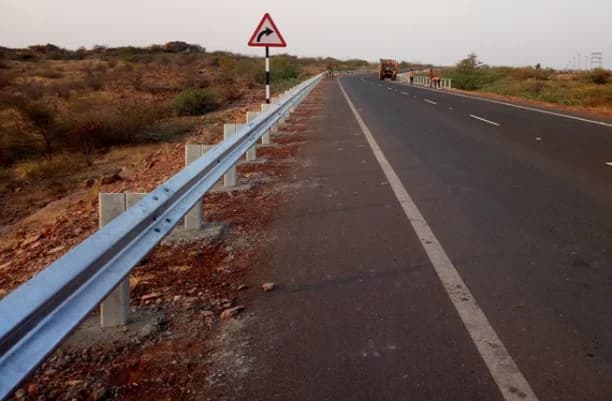
Packaging and Export Logistics
Road safety products face a demanding journey - handling at multiple ports, weeks at sea, temperature and humidity swings, and rough road transport at the destination. Packaging that would be adequate for a domestic delivery is often insufficient for export, and damage discovered on arrival is expensive to remedy. Good export packaging protects both the goods and the project schedule.
Protecting the Product
- Retroreflective sign faces need protective interleaving and edge protection to prevent scratching and delamination of the sheeting.
- Steel components - posts, barriers and fixings - should be bundled, edge-protected and, where relevant, treated against corrosion for the transit period.
- Coated and painted surfaces require padding to avoid abrasion between items.
- Fragile or electronic items such as solar studs or signal components need cushioned, moisture-resistant packing.
Loading and Container Strategy
Efficient container loading balances protection against freight cost. Long items like barriers and posts are palletised or bundled and braced to prevent movement; heavy items are distributed to keep the container within axle and weight limits. Clear labelling - with handling marks, weights and consignee details - speeds up port handling and reduces the chance of mishandling.
Freight Mode and Lead Time
- Sea freight (FCL or LCL) is the default for volume orders, with longer lead times that must be built into the project programme.
- Air freight suits urgent, high-value or low-volume shipments where speed justifies the cost.
- Consolidation of multiple product types into a single planned shipment reduces per-unit freight cost and simplifies customs clearance.
Plan lead times backwards from the installation date, allowing realistic buffers for production, inspection, ocean transit, customs clearance and inland delivery to site.
Working With a Global Supplier and Exporter
The stages above - standard mapping, quality assurance, documentation and logistics - each require specialist knowledge. Managing them independently across several manufacturers, for several product types, in an unfamiliar regulatory market, is a heavy burden for a project procurement team. This is where a global supplier and exporter adds value: not as a factory, but as the single accountable party who coordinates the whole chain.
What a Sourcing Partner Does
- Sources from trusted, audited manufacturers rather than a single production line, so each product is matched to the best-suited maker for the required standard.
- Consolidates multiple product types - signage, crash barriers, road marking materials and safety hardware - into one coordinated order and shipment.
- Manages quality assurance and inspection before goods leave the origin, so problems are caught at the factory rather than on site.
- Prepares complete export documentation and handles the compliance detail that stalls first-time importers.
- Provides a single point of contact and accountability across the whole order, simplifying communication and dispute resolution.
How TMR Works
TMR is a global supplier and exporter of road safety and signage products, headquartered in Bangalore, India. We do not operate as a manufacturer; instead we source from a network of trusted, audited manufacturers and deliver project-matched, compliant solutions to buyers and contractors worldwide. Our role is to translate your destination standard into a precise specification, verify quality before shipment, prepare export-ready documentation, and manage packaging and logistics through to delivery.
Because we work across multiple standards - EN, ASTM, MUTCD, MoRTH and IRC references - we can advise on the right product and class for your market, and consolidate a mixed order into a single, well-documented shipment. To discuss a project, contact us on +91 81234 40049 or email srjoshi@tmrglobalexports.com.
Conclusion: Build the Specification First
Successful international sourcing of road safety products is not about finding the cheapest catalogue item - it is about building a specification that survives the whole journey from factory to installed asset. Start by confirming the destination standard, translate it into a precise line-by-line specification, verify quality before shipment, assemble complete documentation, and package for a demanding international transit.
Handled as a structured process, cross-border procurement becomes predictable and low-risk. Handled as an afterthought, it produces rejected consignments and missed deadlines. Partnering with an experienced global supplier and exporter lets your team focus on the project while a single accountable party manages standards, quality, paperwork and logistics - delivering compliant road safety products, matched to your market, anywhere in the world.
TMR Road Safety Team
TMR is a global supplier and exporter of road safety and signage products, headquartered in Bangalore, India. We source from trusted, audited manufacturers and deliver compliant, project-matched solutions to buyers and contractors worldwide.
Frequently Asked Questions
Common questions about sourcing and importing road safety products internationally
How do I know which standard applies to my project?
Is TMR a manufacturer of road safety products?
What documents do I need to import road safety products?
Why is pre-shipment inspection important?
What is the difference between EN 1317 and AASHTO MASH for crash barriers?
How far in advance should I plan an international order?
Sourcing Road Safety Products for a Project?
TMR sources road signage, crash barriers, road marking materials and safety hardware from trusted manufacturers and delivers worldwide - matched to your destination standard, inspected, documented and export-ready. Call +91 81234 40049 or email srjoshi@tmrglobalexports.com for a quote.